

Writing an anthropology research paper? This list of philosophical anthropology research paper topics provides some ideas for narrowing down your topic to a successful and manageable one. This page also explores the subject of philosophical anthropology. Browse other anthropology research paper topics for more inspiration.
Philosophical Anthropology Research Paper Topics
Altruism
Bruno, Giordano
Buber,Martin
Categorical imperative
Comte, Auguste
Condorcet,Marguis de
Critical realism
Deleuze, Gilles
Dennett, Daniel C.
Derrida, Jacques
Dewey, John
Empedocles
Engels, Friedrich
Enlightenment versus postmodernism
Enlightenment, age of
Entelechy
Environmental ethics
Environmental philosophy
Essentialism
Ethics and anthropology
Evolutionary epistemology
Evolutionary ethics
Evolutionary ontology
Feuerbach, Ludwig
Fromm, Erich
Hegel, G.W. F.
Heidegger, Martin
Henri Bergson
Heraclitus
Hermeneutics
Hobbes, Thomas
Human dignity
Human excellence
Humanism, secular
India, philosophies of
Integrity, dynamic
Kant, Immanuel
Kropotkin, Prince Peter A.
Lucretius
Marx, Karl
Marxism
Naturalism
Neo-Marxism
Nietzsche, Friedrich
Pantheism
Philosophy, dynamic
Popper, Karl
Positivism
Postmodernism
Pragmatism
Science, philosophy of
Spencer, Herbert
Teilhard de Chardin, Pierre
Teleology
Theories
Time
Unamuno,Miguel de
Vernadsky, Vladimir Ivanovich
Whitehead, Alfred North
Xenophanes
Academic Writing, Editing, Proofreading, And Problem Solving Services
Get 10% OFF with 24START discount code
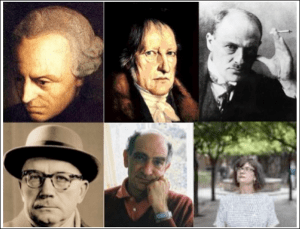 Modern philosophical anthropology originated in the 1920s. During the 1940s it became the representative branch of German philosophy. It arose with, and has absorbed, Lebensphilosophie, existentialism, and phenomenology, although it is not identical with them. It has affinities with pragmatism and the sociology of knowledge. Although it is historically based on certain German traditions, it is also indebted to, and largely anticipated by, the eighteenth-century “science of human nature.” It combines the critical traditions of the Enlightenment with an emphasis on dogmatic certitude.
Historical Background
Following Bernhard Groethuysen, philosophical anthropology is often conceived as embracing all previous philosophy, insofar as previous philosophy dealt with man’s place in the world. But this wide conception blurs the distinctive features of philosophical anthropology. Its history is best restricted to those authors and ideas whose impact is either admitted or can be traced in the literature of modern philosophical anthropology.
The impact of Søren Kierkegaard, Karl Marx, and Friedrich Nietzsche is pervasive. Other generally acknowledged forerunners are Blaise Pascal, Johann Gottfried Herder, Johann Wolfgang von Goethe, Immanuel Kant, G. W. F. Hegel, and Ludwig Feuerbach. Pascal’s influence is discernible in philosophical anthropology’s conception of man as self-contradictory and mysterious, capable of surpassing his natural limits in quest of authenticity. Pascal’s distinction between the organic esprit de finesse and the abstract and lifeless esprit géométrique was accentuated by Kant’s distinction between the phenomenal world of the senses, with its quest for happiness (in the sense of egotistic pleasure), and the noumenal world of the thing-in-itself, between a world of determinate law and a world of transcendental choice. These concepts reveal themselves in the philosophical anthropologists’ assumption of an unbridgeable gap between value and reason, between the ideal and the practical. Kant’s basic questions—“What can I know? What ought I to do? What may I hope?”—are universally accepted in philosophical anthropology.
Herder was the first German author to correlate biology and the philosophy of man. From him stems the conception of man as a deficient being who must compensate for his lack of natural tools and weapons by the creative use of weapons and technology. Hegel’s theory of alienation and its Marxist version have become a vital element in philosophical anthropology’s comprehension and critique of society. Feuerbach formulated the claim that man can be used as the common denominator of philosophy, the true ens realissimum, embracing reason, will, and emotion. He held that philosophical anthropology was to take the place of theology; and indeed, contemporary philosophical anthropology may be regarded as secularized theology. Feuerbach conceived of God as a projection and objectification of the human spirit, reflecting the categorial structure of the human mind and its conceptual tools. This, as well as the corresponding Hegelian view of the divine spirit as being reflected in human history, is one of the recurring themes of cultural philosophical anthropology.
In a specifically German version and modified by the methodology of the practitioners of the Geisteswissenschaften, the “science of human nature,” which stemmed from Thomas Hobbes, John Locke, and the Earl of Shaftesbury and reached its culmination in the eighteenth century, is the principal root of philosophical anthropology. David Hume’s Treatise of Human Nature provided a program for philosophical anthropology. “There is no question of importance whose decision is not comprised in the science of man…. In pretending to explain the principles of human nature we in effect propose a complete system of the sciences” (Everyman ed., Vol. I, p. 5). Philosophical anthropology took up Hume’s empiricism with regard to the moral sciences, as well as his conception of religion.
Adam Smith’s spectator theory of the moral sentiments was an early statement of the excentric position of man. The “Newtonian-Baconian” school of Scottish and French social thought of the eighteenth century (Francis Hutcheson,Adam Ferguson, John Millar,Dugald Stewart, Pierre-Louis Moreau de Maupertuis, Denis Diderot, and Jean Le Rond d’Alembert), which culminated in John Stuart Mill’s sociology, was a direct precursor of philosophical anthropology in its aim of putting the study of man on an empirical biological basis. This school sought to elucidate and bridge the gap between man’s distinctive nature and the sociocultural order in “the belief that it was natural for man to make an order of life different from that in which the race was nurtured earlier, that it was in the nature of his equipment that he should react intelligently and creatively to the situations in which he found himself” (G. Bryson, Man and Society, Princeton, NJ, 1945, p. 173).
The more widely recognized forerunners of philosophical anthropology—Herder, Christian Garve, and Wilhelm von Humboldt—were directly influenced by the Scottish and French anthropologists and Encyclopedists, who had undermined Cartesian dualism. Thus, at the end of the eighteenth century, there was a wide acceptance of certain propositions concerning man’s creative powers, his individuality, and his sociability. The Scottish and French precursors, however, had intended to develop more rigorous methods of investigation than those used by contemporary philosophical anthropologists.
Subject Matter, Attitude, and Goal
Like existentialism and Lebensphilosophie, philosophical anthropology studies man’s existence, his experiences, and his anxieties, combining the subjectivism of existentialism with the cultural objectivism of Lebensphilosophie. It uses the phenomenological methods of Verstehen and reduction. Philosophical anthropology shares with existentialism, phenomenology, and Lebensphilosophie a critique of society. Yet these currents are not identical; Heidegger and Karl Jaspers, for example, refuse to be identified with philosophical anthropology, despite their great impact on it.
Philosophical anthropology seeks to interpret philosophically the facts that the sciences have discovered concerning the nature of man and of the human condition. It presupposes a developed body of scientific thought, and accordingly, in its program it aspires to a new, scientifically grounded metaphysics. It seeks to elucidate the basic qualities that make man what he is and distinguish him from other beings. It combines, and mediates between, what Kant designated as physiological and pragmatic anthropology.
Physiological anthropology studies man’s natural limitations; pragmatic anthropology deals with man’s potentialities, with what he, as a free agent, makes of himself, or is able and ought to make of himself. Thus, philosophical anthropology studies both man as a creature and man as the creator of cultural values—man as seen by a scientific observer and man as interpreted by himself (Aussen- and Innenansicht). Accordingly, most philosophical anthropologists wish to combine scientific methods with an imaginative philosophical approach.
Philosophical anthropology seeks to correlate the various anthropologies that have developed with the specialization of the sciences. Max Scheler distinguished between scientific, philosophical, and theological anthropologies, or interpretations of the fundamental structure of human activities, which know nothing of one another. In order to stem what its followers describe as anarchy of thought and the “loss of the center,” philosophical anthropology offers itself as a coordinating discipline. With the dissolution of traditional beliefs in guidance by gods, by kings and feudal leaders, by God, or by nature, there is today a general lack of direction. Man is now, as he was for Protagoras, the only possible measure. By coordinating and interpreting fragmented knowledge, philosophical anthropology aims at a new understanding of man’s essential qualities and potentialities. It aims to accomplish this by the development of suitable methods, by a factual elucidation of the perplexities inherent in human institutions, and by borderline research (coordinating different branches of the sciences) used as a basis for a new “map of knowledge.”
Since philosophical anthropology arose as an interpretation of various scientific disciplines, it has practitioners in many fields. Although there are only a few academic chairs of philosophical anthropology (Göttingen, Nijmegen), the number of professed philosophical anthropologists is large, chiefly in the German-speaking countries, but also in the Netherlands, Spanish-speaking countries, the United States, and France. Modern French humanism, whether existentialist, religious, or Marxist, is both historically and analytically allied with philosophical anthropology. Many philosophical anthropologists stress that they are theological, historical, political, juristic, biological, phenomenological, or cultural philosophical anthropologists. Much so-called philosophical anthropology is best treated under metaphysics, ontology, theory of value, epistemology, theology, philosophy of science or of history, or under the related contemporary philosophies. This article will discuss only the distinctive features.
Philosophical anthropology embraces most of the social sciences. Some leading practitioners, such as Arnold Gehlen, emphasize the concept of action, rather than man, as the distinguishing feature of philosophical anthropology, and define it as a new empirical discipline, Handlungswissenschaft (similar to “behavioral science” and the “theory of action”), as distinct from the natural sciences and the Geisteswissenschaften.
Philosophical anthropology is an attempt to construct a scientific discipline out of man’s traditional effort to understand and liberate himself. At the same time, however, it is pervaded by the same antiscientific currents that mark existentialism, Lebensphilosophie, and phenomenology. But it is its dialogue with science that gives philosophical anthropology its peculiar character.
The Crisis of Science
Philosophical anthropologists see a “crisis of science,” a crisis first brought into view by three “humiliations of man.” First, the humiliation of Copernican astronomy removed man’s habitat, the earth, from the center of the universe; second, Charles Darwin’s biological evolutionism “shamed and degraded” man; and third, the historical schools revealed the relativity of religious and national cultural values. The crisis in science has been brought to a head by modern developments in depth psychology, post-Euclidean mathematics, and the indeterminacy principle in nuclear physics. From the scientific point of view, these developments represent advances rather than a crisis. However, German philosophers since Kant have conceived of science as being fixed in a rigid mathematicomechanical determinism. According to philosophical anthropologists, this basic concept has broken down. There is a wide consensus among Continental thinkers that nineteenth-century materialism has been overcome and that the methods of the Geisteswissenschaften and phenomenology have been vindicated.
These methods seek the meaning immanent in events and in the works of man rather than the causal nexus between events. They aim to interpret other minds (both individual and collective), their peculiar intentions and tendencies, and the institutions through which their ideas have found expression. They investigate the conscious and unconscious actions of human beings and the structure of interpersonal (social and cultural) relationships. These methods are descriptive, interpretative, organic, and concrete, rather than explanatory, mechanical, and abstract, as in the natural sciences. This distinction of two methodologies—causal explanation on the one hand and Verstehen and phenomenological reduction on the other—takes up the emphasis of what is known in English as the Germano-Coleridgean school on, in the words of J. S. Mill, a philosophy of society in the form of a philosophy of history seeking a philosophy of human culture.
Theory of Knowledge
The crisis of science, according to philosophical anthropologists, evinces a deep crisis in the theory of knowledge— a crisis that makes imperative the adoption of pragmatic theories of truth. Traditional epistemology, they claim, was occupied with only one of the functions of consciousness. It failed to take into account what Pascal called the logique du coeur or esprit de finesse, which was akin to Samuel Taylor Coleridge’s “imagination” and John Henry Newman’s “illative reason.” And consciousness itself is only a part of the forces that shape human reasons. For philosophical anthropologists, as for sociologists of knowledge, knowledge is determined by dispositions and by outside factors. Erich Rothacker claims that all knowledge is based on the particular ways of thought (dogmatische Denkformen) of national and sectional cultures, which determine both the questions asked and the answers given. Questions and answers have no validity apart from their appropriateness to the cultural environment (Umwelt). On the other hand, Scheler sought to establish an objective scale of values that would take into account nonrational elements. He distinguished in an ascending order the strata of vitality, intellectuality, and holiness (Herrschaftswissen, Leistungswissen, and Heilswissen). Despite his epistemological relativism, Rothacker has applied a similar scheme of “lower” and “higher” values in his psychological theory. Although most philosophical anthropologists profess value relativism, implicit value scales may be discerned underlying their methodological views and cultural criticism.
Methodology
Philosophical anthropology rejects the Cartesian dualism of body and soul: Man is not part animal and part spirit but a being sui generis, distinct from animals in physical condition and in aspirations. This attitude, together with philosophical anthropology’s theological roots, may account for a nearly universal (although currently weakening) rejection of Charles Darwin and Sigmund Freud for allegedly appealing to the forces of primitivism and animality in man. At the same time, many philosophical anthropologists reject modern intellectualism; their rejection of rationality, like that of many existentialists and Lebensphilosophs, has its roots in the romantic reaction to the Enlightenment and the French Revolution. In its suspicion of Verwissenschaftlichung (“scientism”), philosophical anthropology perpetuates the traditional German attacks on Reflexionsphilosophie, in which the nonrational aspects of reality are alleged to be ignored.
Philosophical anthropology’s conception of method was formulated by Wilhelm Dilthey and Edmund Husserl. Husserl’s nonempirical phenomenological approach to philosophical questions was claimed to be presuppositionless, wholly scientific, and logically prior to the natural sciences. It is concerned with meanings, an intuitive comprehension of directly experienced essences, and it involves a distinct method for “analyzing” (or rather, interpreting) facts, qualities, relationships, and the basic categories of human nature and culture—a method of analysis different from that which results in an explanatory theory. However, such thinkers as the biologist Adolf Portmann and the psychologist Karl Jaspers attempt to combine the scientific and interpretative approaches.
Ludwig Binswanger, for example, does not exclude the methods of natural science, but raises two objections to reveal their inherent limitations. One is that all abstractions are transpositions and simplifications of reality. The other is that the registration of stimuli in experimental psychology restricts the field of investigation so as to make the perception of meaningful wholes impossible; it precludes the essential selective and synthesizing activities.
Helmuth Plessner sees philosophical anthropology as the paradigm of borderline research. Although there is still a methodological gap between the physical and the social sciences, there has been spectacular progress toward methodological and substantive unification of physics, chemistry, and mineralogy, and of physiology and biochemistry. This progress supplies a model for philosophical anthropology. In its physical concerns, philosophical anthropology should correlate the work of medicine, zoology, chemistry, and physics, and in its nonphysical concerns, it should correlate the work of psychology, psychoanalysis, psychiatry, and the cultural sciences.
The physical and nonphysical concerns correspond to the traditional divisions of body and soul and of empiricism and subjective idealism. The division between body and soul emphasizes the ineluctable natural limitations of man and the determined aspects of his nature, and thus ignores his freedom and historicity, while the division between empiricism and subjective idealism has traditionally lost itself in metaphysical speculation. Philosophical anthropology tries to avoid both extremes; it sees man as essentially homo absconditus, inscrutable, an open question. Man must formulate his destiny so that he is not held rigidly in one role but safeguards his creative freedom. The direction in which this freedom permits man to fulfill himself is not amenable to scientific discovery, and thus science is devalued. Man’s choices depend on his philosophical understanding of his own position in the world.
An infinite variety of choices is open to man. What distinguishes man’s nature is not how he chooses, but that he does choose—that he is not determined by his biological and physiological constitution but is formed in the light of cultural values he himself has created and internalized. Philosophical anthropology’s contribution to the study of cultures is its emphasis on the creative element in the unfolding of the various conceptions of man’s position in the world. Therefore, man’s selfunderstanding, or self-image, is a central theme of philosophical anthropology.
The Self-Image of Man
Formerly, man was threatened not primarily by man, but by nature. Through science, nearly all natural phenomena have been or can be brought under man’s control. Man is threatened neither by nature nor by the God who made nature, but by his own use of nature. Man’s enemy is man, manmade structures, or the God who made man.
Again, even in coming to know nature, man (or his scientific representatives) meets himself rather than nature. Man no longer seeks nature as such, but nature as we question it for specific scientific purposes and in the specific contexts of axiomatic frameworks that we ourselves have determined.
Thus, man is inescapably confronted by man. We have reason to ask, What is this man? But what causes us to ask questions about the form in which man’s subjective image of himself appears in his consciousness?
Man’s subjective image determines what he makes of himself. Animals are as nature has created them, but man must complete his character; nature has supplied only the rudiments of it. Man must form his own personality, and he does so according to his image of what he can and should be. Scheler has delineated a historical typology of Western man’s self-images, or “reality-worlds.”
Man first saw himself as homo religiosus, a view based on the Judeo-Christian legacy of supernaturalism and its ensuing feelings of awe and of inherited guilt. The next stage was homo sapiens, rational man in harmony with the divine plan. Since the Enlightenment, this image has been largely superseded by the naturalistic, pragmatic image of homo faber—man as the most highly developed animal, the maker of tools (including language),who uses a particularly high proportion of his animal energy in cerebral activities. Body and soul are regarded as a functional unity. Human being and development are explained by the primary urges of animal nature—the desire for progeny and the desire for food, possessions, and wealth. Machiavellianism, Marxism, racism, Darwinism, and Freudianism, it is claimed, are based on this interpretation of man.
These three self-images of man have in common a belief in the unity of human history and in a meaningful evolution toward higher organization. The images of homo dionysiacus and homo creator break with this tradition and herald a new orientation of anthropological thought. In the image of man as homo dionysiacus, man sees decadence as immanent in human nature and history. Typical exponents of this view are Arthur Schopenhauer, Nietzsche, and neoromantics like Ludwig Klages, Oswald Spengler, and Leo Frobenius. Man is seen as the “deserter” or the faux pas of life; as a megalomaniac species of rapacious ape; as an infantile ape with a disorganized system of inner secretions; or as essentially deficient in vital powers and dependent for survival on technical means. Man’s power of thought is an artificial surrogate for missing or weak instincts, and his “freedom to choose” is a euphemism for his lack of direction. Human social institutions are pitiful crutches for assuring the survival of a biologically doomed race. Reason is regarded as separate from the soul, which belongs to the vital sphere of the body. Reason is the destructive, “demoniac” struggle with, and submergence of, the healthy activity of the soul.
The image of man as homo creator is likewise derived from Nietzsche, and also from Feuerbach. But the Nietzschean superman has been transformed into a stricter philosophical conception by Nicolai Hartmann, Max Scheler, and the Sartrean existentialists. Scheler called this view a “postulatory atheism of high responsibility.” Man has no ontological knowledge of an ultimate being. Contrary to Kant’s postulate of the ethical need for a God, in the new view there must be no God—for the sake of human responsibility and liberty. Only in a mechanical, nonteleological world is there the possibility of a free moral being.Where there is a planning, all-powerful God, there is no freedom for man responsibly to work out his destiny. Nietzsche’s phrase “God is dead” expresses the ultimate moral responsibility of man; the predicates of God (predestination and Providence) are to be related to individual man.
Man’s awareness of his own self-images illuminates the whole range of his genuine potentialities so that his choice of an authentic form of life is not restricted by narrowness of view.
The Major Branches of Philosophical Anthropology
Philosophical anthropology shares with French humanism a particular critical analysis of society, but before this analysis can be presented, it is necessary to make a survey of the important branches of philosophical anthropology and of their results.
Biological Philosophical Anthropology
The reaction to determinism in the physical sciences has given rise to biological philosophical anthropology, or bioanthropology. Bioanthropology scrutinizes biological theories philosophically, primarily to correlate man’s creative achievements and attitudes with his physiological organization. Man’s cultural role—his character as a symbol- making being capable of abstraction, forethought, language, and intersubjective communication—is depicted as an irreducible function of his physiological constitution.
Among many important practitioners of bioanthropology are the biologists F. J. J. Buytendijk and Adolf Portmann and the philosopher Arnold Gehlen. Important starting points of bioanthropological thought have been Walter Garstang’s concept of paidomorphosis and Jakob von Uexküll’s concept of milieu (Umwelt), which was developed earlier, in philosophical terms, by Edmund Husserl. Paidomorphosis emphasizes the embryonic qualities that are preserved in man but lost in adult animals, as well as man’s retarded extrauterine development. Gehlen has used the concept of man as a fetal ape to account for man’s cultural achievements which, he claims, are conditioned by man’s helpless status in the world. Devoid of instincts and of natural weapons and tools, man has been compelled to compensate for his shortcomings by active responses to the challenges of his environment and of his physiological urges.Man defends himself by his actions, whose scope, direction, and intensity, in contrast to instinctive reactions, are within his discretion. He transforms the natural environment into a system of action (Handlungskreis), the responses to which are perpetuated in institutions and language. Man’s cultural environment is thus both a physiological condition of his survival and a distinctive criterion of his nature.
Uexküll
From his investigations into animal physiology, Uexküll derived a theory of the specific environmental determination of human life. Each species of animal lives in its own Umwelt; its consciousness of sense data is strictly limited by its innate capacities of perception. The range of these capacities corresponds to the teleology immanent in the “life plan” of different animals and is strictly limited to the life plan’s specific tasks. Uexküll started from Kant’s theory that the categories of the understanding determine the perception and conception of the data of the senses. It was Uexküll’s teleological interpretation that distinguished his work from that of Western contemporaries who independently developed the sociology of animals. In the German romantic tradition, Uexküll was concerned with fighting the “mechanistic,” positivistic conception of science that he saw represented in biochemistry and behaviorism.
Buytendijk
Buytendijk’s physiological and psychological investigations have been undertaken in close contact with such phenomenologically oriented thinkers as Scheler, Plessner, Viktor von Weizsäcker, and V. E. von Gebsattel. Like Uexküll, Buytendijk rejects Cartesian dualism and its mechanical interpretation of bodily processes; unlike Uexküll, he rejects the hypothesis that man is determined by his Umwelt. Through his detailed comparisons of animal and human physiology and psychology, Buytendijk has sought to work out man’s unique condition as expressed in his capacity for abstraction and symbolization (the ability to create signs representing what is bodily absent), and in his capacity for the logical correlation of signs. For Buytendijk, biology is a historical science that must be understood in motivational, teleological terms. He conceives of motives and processes as value-related and spontaneous, derived from the built-in planning capacity of a self-structuring organism. Parallels with verstehende sociology are obvious, but Buytendijk’s impressive ability to rest his philosophical views on a biological basis cannot conceal the fact that he held his views prior to his scientific illustration and testing of them.
Portmann
Adolf Portmann’s work represents the culmination of bioanthropology. It aims at an integration of biological with psychological, sociological, and anthropological thought. According to Portmann, human biology has turned into anthropology, because the life of man, despite superficial similarities to animal life, is something sui generis. Portmann emphasizes the uniqueness of human action, language, foresight, and upright carriage, and of the human growth rhythm—duration of pregnancy, bodily proportions, extrauterine babyhood, and late formation of the female pelvis. These qualities, he claims, arise from a characteristic interpenetration of the hereditary process and teleological, sociocultural processes. Man’s individuality (which continues to grow while the body decays) and man’s sociability combine to establish his undetermined “openness,” in contrast to determination of the animal by his Umwelt.
Portmann’s central concept is “internality,” the fact that individuals are centers of purposeful activity who use the external shell of the body as a means of self-expression and of communication with other individuals. Portmann does not claim that the affirmation of man’s individuality and sociability provides the “meaning of life.” Although specific mysteries of man’s biological structure have been solved, he claims, the “basic fact” for philosophical anthropology continues to be man’s “mysteriousness.” Man has no built-in evolutionary mechanism leading to an equilibrium; there is only a creative variability (Disponibilität) of the human situation. Man’s spontaneous individuality creates new self-images; his sociability spreads and maintains them.
Portmann has sought, however, to advance beyond the limits of functional morphology to a vantage point that will illuminate the hierarchy of values—a vantage point whose need has increased in view of the tremendous potential power of biotechnical advances to influence and change the human condition, and perhaps human nature. However, as in the biophilosophies of Henri Bergson, Pierre Teilhard de Chardin, and Julian Huxley, it is easier to discern the philosophical basis of Portmann’s biological hypotheses than it is to discover any positive contribution that biology has made to his philosophical thought. He first developed his conception of man as functional unit as a philosophical hypothesis. “Openness” has been a theme of philosophical anthropology since the time of Herder and Kant.
In general, it must be said that no substantive lesson is to be drawn from either functional or analytical biology, except that it is of man’s essence to create structured and meaningful systems of action. The biological foundation of man’s creativity entails no concrete guide to what man ought to do. Nothing would appear to follow from the fact that creativity has biological roots except that man cannot permit himself to be altogether determined by any given environment. He must transcend it creatively, and he must be guided by ideas and leitmotifs rather than by instincts, by decisions rather than by reactions to stimuli. But the questions of what decisions man will take and what ideas he will adopt are not answered by bioanthropology, which emphasizes the malleability of human nature as a basic fact. Any insight into the potential content of human achievement must therefore be based on the plurality of the cultures that have unfolded in history. Bioanthropology thus leads into cultural philosophical anthropology.
Cultural Philosophical Anthropology
Like American cultural anthropology, cultural philosophical anthropology is concerned with man and his works, with culture history and culture sociology, and with historical morphology and the philosophy of history. It is interested primarily in developed societies—“high cultures” that have created a style of their own beyond the biological and trivial uniformities of the tribal state. Like German sociology, it emphasizes the multiformity rather than the uniformity of human nature, and the history rather than the theory of cultures. Like Portmann’s bioanthropology, it finds an ultimate mystery in man—the mystery of archetypes and racial dispositions.
Cultural anthropology combines Dilthey’s historicism with the phenomenological method. Man comes to know and liberate himself through history. A comparative study of societies elucidates the human situation and the human predicament. But this study results in the same merely formal characteristics elaborated by bioanthropology— the adaptability of the human mind, the need for a “sane” worldview, sociability with its ensuing problems, a common growth rhythm, and common basic physiological urges.
Arnold Gehlen and Erich Rothacker are the most representative cultural philosophical anthropologists, while Werner Sombart is the most opinionated. Gehlen and Rothacker present integrated theoretical systems that have an ultimately psychological basis. Their psychologies, like that of Dilthey, are essentially descriptive and interpretative, and their psychological interpretations mirror their cultural philosophies.
Rothacker has classified cultural factors in a scale by “laws of polarity.”He seeks to understand individual cultures by a process of “reduction” to “national souls” (attitudes and dispositions that generate Weltanschauungen) and to myths. These ur-experiences are not further reducible; they are embodied in the racial inheritance. Therefore, although people do create and develop the Umwelt of their national cultures, the possibilities that are thereby realized are ultimately determined. Rothacker’s historicist relativism is less free from ethnocentrism than one might be led to expect by the emphasis of philosophical anthropology on the openness of man.
Gehlen’s psychology is rooted in the archaic stage of cultural development. The values of this stage serve as criteria for the evaluation of late cultures, which accordingly appear as falls from grace.
In Sombart’s anthropology ethnocentric traits are also emphasized. Thus, man’s irreconcilable diversity rather than his potential openness is seen as distinguishing the human situation.
Ernst Cassirer, on the other hand, sought to discover the basic function of human cultural achievements (language, myth, religion, art, science, history) behind their innumerable forms and to trace them to a common origin in man’s symbol-making power—the power to build up an “ideal world” of his own.
Psychological Philosophical Anthropology
Bioanthropology and cultural philosophical anthropology are the most important branches of philosophical anthropology. Among other branches, only psychological philosophical anthropology and theological philosophical anthropology require separate mention.
Psychological philosophical anthropology is the most successful post-Freudian development in psychiatry on the Continent and, through existential psychoanalysis, is exerting considerable influence in the English-speaking world. The outstanding figures in this movement are Ludwig Binswanger, Erwin Straus, and Medard Boss. Erich Fromm seeks to incorporate his psychology within philosophical anthropology, and Rollo May in the United States and R. D. Laing in Britain follow similar lines. Their common belief is that traditional experimental psychology requires the assistance of philosophical thought to arrive at satisfactory results. Some psychological philosophical anthropologists oppose the empirical hypotheses and inductive statistical methods of experimental psychology; most of them combine experimental methods with a specific philosophical or phenomenological approach.
Since psychological philosophical anthropology deals with individual cases, it lends itself to concrete and descriptive investigations. Analyses have been made of laughter and weeping, fantasy, shame, resentment, pleasure, love, and fear. These analyses do not consist in mere registration of stimuli but in selective and synthesizing acts of interpretation by phenomenological “reduction” to an intuition of essential qualities. Plessner has traced the capacity for laughter and weeping to man’s “excentricity,” his ability to transcend his innate nature and to observe, judge, and respond to situations. Human moods (Stimmungen) are typically described as obstacles to the achievement of authenticity. The irrational elements in moods undermine the continuity of character, which is man’s potential ability to give meaning and direction to his life. Accidental attitudes that arise from the challenge of situations thus deprive man of his right to make responsible choices; they tie him to an impoverished, one-sided anthropology.
Binswanger developed existential analysis from Freud’s psychoanalysis. He describes Freud’s positivist, “utilitarian” anthropology as one-sided and negative. Its culture concept, he claims, concentrates negatively on the taming of natural urges rather than positively on a teleological image of man’s potentiality. Freud’s “somatographic” or “somatomorphic” conception of existence stresses the scientific analysis of sleep, dream, passion, and sensuality while, according to Binswanger, it neglects the historical and cultural aspects of existence, such as religion, art, ethics, and myth, all of which are as important as science. In Binswanger’s view psychological investigation should be directed toward the self-transcending, exercise of man’s liberty to make authentic choices. The psychologist’s task is to illuminate the “inner life history” of the patient, his self-structuring in the light of his inner motivation. Self-structuring is equivalent to character or to the response that the individual makes to the challenge of the world around him. St. Augustine, to whom we owe the beginnings of autobiography, is a case in point. Illness prevented him from carrying out his ambition to become an orator. He transcended his natural disability by turning toward the spiritual world and thus arrived at his essential “real being.” He could have reacted otherwise— by resentment or frustration, by neurosis or suicide. These and other potentialities held out to Augustine the temptation to restrict his character by the impoverishment inherent in giving in to an irresponsible choice—a choice suggested by the logic of the situation. Augustine chose an autonomous life that preserved his access to a full range of human values. Psychosis is explained as an “abortive encounter”with existence, or a form of existential misdirection. Diagnosis of a psychosis therefore depends on a valid interpretation of what constitutes an authentic existence. An authentic existence, according to Binswanger, consists in a life in keeping with a legitimate cultural (religious or national) tradition; in a dialogue with other beings (the “Thou”); or in the ability to act in character in the face of situational challenges.
However, the first of these criteria depends on values that are subject to unresolved doubt; the other two are so devoid of specific content that they hardly invite contradiction. Existential analysis, even more than psychoanalysis, obliterates the line between the normal and the abnormal and reduces psychological problems to questions of Weltanschauung.
Viktor von Weizsäcker, V. E. von Gebsattel, Erwin Straus, and Harald Schultz-Hencke have carried out structural analyses of inhibited character types and, in particular, of sexual perversions. Health is defined as openness to all potentialities of life, and obsessional urges are therefore interpreted as disturbed worldviews that enslave the individual in rigid, one-sided, compulsive attitudes and interfere with his social “I-Thou” relationships. Sexual perversions, in particular, have been construed by Gebsattel as obsessional urges that preclude a lasting I-Thou relationship based on mutual freedom, and as thus being incapable of providing ultimate satisfaction. Medard Boss, however, arguing from an equally existential basis, stoutly rejects this view. Gebsattel’s apotheosis of the procreative element in love, however, points to the close affinity of philosophical anthropology with “secularized theology.”
Theological Philosophical Anthropology
Theological anthropology emphasizes the Biblical conception of man in a dialogue with God. Martin Buber, Emil Brunner, and Dietrich Bonhoeffer are remarkable representatives of this movement, although their work is best studied in its theological context. However, the openness of man and his individuality and sociability are dominant themes of their work. The human difficulty of making the right choices is paralleled by the theological conception of man as simultaneously just and sinning.
A merely intellectual and logical exposition of God’s message, in their view, is not enough for an understanding of God’s revelation. An emphatic existential I-Thou relationship between man and God, based on the logique du coeur, is required.What matters is not that something is true, but how it can be made to come true. Belief in God has been explained by theological philosophical anthropologists, following Feuerbach, in terms of the self-understanding and the creative self-image of man.
The need for a postscientific interpretation of the Creed that is appropriate to a “mature” humanity and avoids theological sophistry has become a leading motif of theological anthropology, and this makes it difficult to distinguish between its tenets and those of secular philosophical anthropologies.
Critique of Society
Philosophical anthropology shares with contemporary French humanism the conception that there is a crisis of the sciences that reflects a radical crisis of European society. It rejects contemporary bourgeois society, from either a romantic or a Marxist viewpoint, for the alleged dehumanizing tendencies it has developed in the process of rationalization following the breakup of feudal and religious institutions.
The rise of scientific rationalism is not regarded as a process of liberation from the shackles of superstition, conventions, and fallacies, but as a process that has deprived Western man of his “center of gravity” and has alienated him from his authentic nature through the replacement of value by “means-end” relationships, by neutral experiment, and by mechanico-mathematical abstraction. In the view of philosophical anthropologists, the “age of transition,” or “age of crisis,” which heralded the acceptance of utilitarianism in the English-speaking world, is still unresolved. Man’s salvation from alienation is not seen as a continuous process of improvement or of piecemeal social engineering but as a radical challenge that is less concerned with practical reform than with a utopian rejection of the modern world.
The central theoretical insights of philosophical anthropology consist in an affirmation of the individuality and sociability of man as ultimate values. This theory would seem to suggest a social organization that combines an optimum of free choice with the minimum encroachment on individual liberty that is compatible with a viable social coexistence. This is in fact the utilitarian image of man that has prevailed since the early nineteenth century in the English-speaking world, where this image of man has been internalized to such an extent that the discussion of ultimate metaphysical questions has predominantly given way to the discussion of means to assure the accepted end of mutual accommodation and individual discretion. By contrast, on the Continent, and especially in Germany, the romantic reaction to the French Revolution precluded the acceptance of the philosophy of the Enlightenment. No commonly accepted concept of society was developed to counterbalance an unbridled individualism except the radical panaceas of nationalism and totalitarianism. By emphasizing the importance of both individuality and sociability, philosophical anthropology is returning to the type of position that gave birth to utilitarianism, and it may therefore be a step toward a utilitarian view of the world. Although most of its representatives present ethnocentric or nihilistic conclusions, these are not inevitable consequences of philosophical anthropology’s affirmation of the creativity and sociability of man.
Bibliography:
- Bally, Gustav. Der normale Mensch. Zürich, 1952.
- Boss,Medard. Psychoanalyse und Daseinsanalyse. Bern, 1957.
- Bryson, Gladys. Man and Society. Princeton, NJ: Princeton University Press, 1945.
- Buytendijk, F. J. J. Allgemeine Theorie der menschlichen Haltung und Bewegung. Berlin, 1956.
- Buytendijk, F. J. J. Mensch und Tier. Hamburg, 1958.
- Gebsattel, V. E. von. Prolegomena einer medizinischen Anthropologie. Berlin: Springer, 1954.
- Groethuysen, Bernhard. Philosophische Anthropologie: Handbuch der Philosophie, Part III, 1–207. Munich and Berlin, 1928.
- Häberlin, Paul. Der Mensch: Eine philosophische Anthropologie. Zürich: Schweizer Spiegel, 1941.
- Kuhlmann, Gerhardt. Theologische Anthropologie im Abriss. Tübingen, 1935.
- Laing, R. D. The Divided Self: A Study of Sanity and Madness. London: Tavistock, 1960.
- Landmann,Michael. De Homine, 543–614. Freiburg and Munich, 1962.
- Landmann,Michael. Philosophische Anthropologie. Berlin, 1955.
- Landsberg, P. L. Einleitung in die philosophische Anthropologie. Frankfurt, 1949.
- Lipps, Hans. Die Wirklichkeit des Menschen. Frankfurt, 1954.
- Litt, Theodor. Die Selbsterkenntnis des Menschen. Leipzig, 1938.
- Loewenich,Walther von. Menschsein und Christsein bei Augustin, Luther und J. Burckhardt. Gütersloh, Germany, 1948.
- Löwith, Karl. Das Individuum in der Rolle des Mitmenschen. Munich, 1928.
- May, Rollo, ed. Existence. New York, 1958.
- Michel, Ernst. Ehe: Eine Anthropologie der Geschlechtsgemeinschaft. Stuttgart, 1948.
- Pappé, H. O. “On Philosophical Anthropology.” Australasian Journal of Philosophy 39 (1961): 47–64.
- Pfänder, Alexander. Die Seele des Menschen. Halle, 1933.
- Portmann, Adolf. Die Biologie und das neue Menschenbild. Bern, 1942.
- Portmann, Adolf. Zoologie und das neue Bild des Menschen. Hamburg, 1956.
- Pringle, J.W. S. The Two Biologies. Oxford: Clarendon Press, 1963.
- Rosenstock-Huessy, Eugen. The Christian Future. New York: Scribners, 1946.
- Schultz-Hencke, Harald. Der gehemmte Mensch. Leipzig: G. Thieme, 1940.
- Strasser, Stefan. “Phenomenological Trends in European Psychology.” Philosophy and Phenomenological Research 18 (1957): 18–34.
- Translated by Ludwig B. Lefebre as Psychoanalysis and Daseins-analysis. New York and London, 1963.
- Weizsäcker, Viktor von. Der kranke Mensch: Eine Einführung in die medizinische Anthropologie. Stuttgart, 1951.
ORDER HIGH QUALITY CUSTOM PAPER

Always on-time

Plagiarism-Free

100% Confidentiality
