

Writing an anthropology research paper? This list of evolution research paper topics provides some ideas for narrowing down your topic to a successful and manageable one. This page also outlines the various models of evolution that have been proposed, including the Darwinian theory and the most popular alternatives. It then outlines the early development of ideas about how life could have developed, including the Lamarckian theory of the inheritance of acquired characteristics. The development and publication of Darwin’s theory is described, along with the controversies following its publication. Efforts to promote alternative theories in the late nineteenth century are described and the implications of the various theories for ideas about human origins and social evolution noted. The article concludes with the emergence of modern Darwinism and later debates such as those arising from sociobiology and evolutionary developmental biology. Browse other anthropology research paper topics for more inspiration.
Evolution Research Paper Topics
Ape biogeography
Aquatic ape hypothesis
Arboreal hypothesis
Arc of evolution
Australopithecines
Biological adaptation
Biological anthropology
Biological anthropology and neo-Darwinism
Catastrophism
Charles Darwin
Cladistics
Creationism versus geology
Darwin and Germany
Darwin and India
Darwin and Italy
Darwinism versus Lamarckism
Dinosaurian hominid
Disbelief in evolution
Dropithecus
Dynamic integrity
Evolution education controversy
Evolution of primate brain
Evolutionary anthropology
Evolutionary epistemology
Evolutionary ethics
Evolutionary ontology
Evolutionary psychology
Extinction
Fossil record
Fossils
Galapagos Islands
Gigantopithecus
Hominid taxonomy
Hominoids
Homo antecessor
Homo erectus
Homo ergaster
Homo habilis
Homo sapiens
Human canopy evolution
Human evolution
Human genetics
Humans and dinosaurs
India and evolution
Issues in hominization
Kenyanthropus platyops
Kenyapithecus wickeri
Lucy reconstruction models
Mass extinctions
Meganthropus
Models of evolution
Modern Darwinism
Molecular evolution
Monkey Trial [1925]
Monogenesis versus polygenesis
Morphology versus molecules in evolution
Narmada man
Natural selection
Neandertal evidence
Neandertals
Neo-Darwinism
Non-Darwinian evolutionary mechanisms
Orangutan-human evolution
Oreopithecus
Organic evolution
Origin of life
Origin of Neo-Darwinism
Primate extinction
Primate genetics
Primate morphology and evolution
Russia and evolution
Sahelanthropus tchadensis
Sexual selection
Social Darwinism
State Darwin Museum, Moscow, Russia
Theories
Uniformitarianism
Zinjanthropus boisei
Academic Writing, Editing, Proofreading, And Problem Solving Services
Get 10% OFF with 24START discount code
Evolution Definition
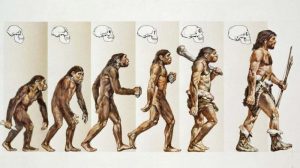 The term ‘evolution’ is widely used to denote the development through time of societies, cultures, and more especially of living species. It is often contrasted with the view that these entities were divinely created as we see them today, and is routinely (but incorrectly according to modern biological theory) associated with the idea of progress. This article outlines the various models of evolution that have been suggested to account for the development of life and social organization, and then shows how the theories were formulated and popularized. Particular attention is paid to the work of Charles Darwin, whose theory of biological evolution by natural selection is now seen as the most influential expression of the basic idea of natural development. However, non- Darwinian evolutionary ideas also played a role in biology and were perceived to have implications for social evolution.
Models of Evolution
The term ‘evolution’ is derived from the Latin evolutio, denoting the unrolling of a scroll. In the eighteenth century it was applied to the growth of the embryo, then often described as the mere expansion of a preformed miniature. This application was retained up to the nineteenth century, by which time it was clear that the development of the embryo consisted of the progressive appearance of more complex structures. The philosopher and sociologist Herbert Spencer generalized the term by applying it to any process of natural progressive development, thereby creating the still common but inaccurate belief that all evolution must be progressive. In particular, Spencer applied the term to the development of societies and of life on earth.
Charles Darwin did not often use the term when describing his theory of the origin of species, but by the end of the nineteenth century, this had become the most common version of ‘evolution.’ However, Darwin’s theory did not imply an inevitable progression toward complexity, and much controversy has surrounded the association between evolution and progress. Darwin’s theory of natural selection now dominates biology and is being extended to many other domains; it is but one of a number of mechanisms that have been suggested to explain evolution, each of which has its own associated implications.
The Ladder of Progress
Perhaps the most popular model of evolution, and one that reveals the link with embryology, is of a linear hierarchy of stages of development from inception to maturity. Such a model simply assumes that all change is progressive and that there is only one direction of development. When applied to societies or species, the model can be adapted by supposing that many lines of development each ascend the same hierarchy but at different rates, so that the slow developers illustrate the ancestral stages already passed through by those at the top of the scale.
Evolutionary Trees
Although the ladder model is still popularly applied to the evolution of life on earth, and was once accepted in the social sciences, biologists and sociologists now realize that there is no single goal toward which evolution is developing – neither the human race nor Western civilization can be treated as the most mature phase of development. Evolution is better represented as a tree or a bush with many branches, each of which is constantly subdividing. The end product of one branch cannot be seen as the goal toward which all the others are ascending, and it is impossible for the end product of one branch to illustrate exactly the ancestral form of another branch. The living apes are not immature humans, because even if the common ancestor from which humans and apes have evolved would be classified as an ape, it would no longer be identical to any of the living ape species. If there is progress on the branching tree-model, it has to be defined in more sophisticated terms so that there are many different ways to become more complex.
Darwin argued that branching evolution explains how we are able to classify species into groups within groups (species, genera, families, etc.). Two species descended from a common ancestor will still share many characters derived from that ancestor, and will share some characters with even more distant relatives. Darwin and his modern followers assume that each new character is developed only once, so all species exhibiting the character are descended from a common ancestor that also had the character. This assumption will be invalidated if there are cases where two lines of evolution evolve the same character independently (convergence or homoplasy). It will also be invalidated if there are even small-scale examples of ladder-like evolution, where several branches are constrained to evolve along the same pattern of development (parallelism).
Adaptation
The branching model had already been applied to the evolution of languages before Darwin and his followers used it to transform biology. Darwin’s key insight was that there was no natural mechanism that could force evolution along a single predetermined path. Evolution is driven not by progress but by the necessity for each species to adapt to its environment in an ever-changing world. Branching occurs because a single population can sometimes become divided by a geographical barrier, after which each isolated population will develop independently in response to the different adaptive pressures it encounters. Progress to a more complex structure is at best a by-product of adaptation and is never inevitable in any one branch; indeed, many species are the products of degenerative evolution. In the animal kingdom, two branches of evolution can seldom if ever rejoin via hybridization (although this does happen in plants). Here, there is a clear contrast with social and linguistic evolution, where mergings and borrowings are frequent.
Darwinism and Lamarckism
Two mechanisms of adaptive evolution have been suggested: natural selection (Darwinism) and the inheritance of acquired characters (Lamarckism). Darwin assumed that the species consists of a population of organisms that exhibit some degree of individual variation and that these variations are inherited – we now explain them as genetic differences produced by mutations. He argued that if the population is exposed to a new environment, some variants will by chance be able to cope better with the new conditions; they will survive and reproduce, transmitting their favorable characters to the next generation. Any that are less fitted to the environment will be unlikely to breed and may even die, so their characters are eliminated from the population. Over many generations, this process of natural selection (Spencer called it the ‘survival of the fittest’) will change the species to adapt it to the environment.
Some time before Darwin, J.B. Lamarck proposed that the inheritance of characters acquired during an organism’s lifetime could accumulate to give adaptive transmutation. An acquired character is produced by the organism’s behavior, which in the wild is usually a response to the environment. Thus, the ancestral giraffes, striving to reach the leaves of trees as an alternative source of food, were able to lengthen their necks, just as a weightlifter can acquire better developed muscles. If such characters are inherited, the next generation of giraffes would be born with longer necks and would then stretch them further. This mechanism was once popular in biology, and corresponds quite closely to how humans transmit new ideas to their descendants. However, where teaching and learning provide a natural mechanism for ideas to be transmitted, modern genetics has shown that there is no way in which acquired biological characters can be inherited. Lamarckism has been banished from biology: The giraffe got its long neck because those who by chance inherited the genes producing that trait reproduced faster than those who carried the genes for shorter necks. The genetic differences are the product of mutations that are random as far as the requirements of the species are concerned.
Nonadaptive Evolution
There are also several mechanisms of biological evolution that suppose that not all developments are adaptive. In the nineteenth century, many naturalists believed that evolution was the unfolding of a predetermined pattern, perhaps analogous to or controlled by the forces of embryological development. Such ideas gave rise to the theory of recapitulation, which supposes that the evolutionary history of the species is traced out by the development of the embryo (or ‘ontogeny recapitulates phylogeny’). This in turn suggests a model of evolution more in tune with the notion of a hierarchical ladder of development. The possibility that saltations (evolutionary jumps or macromutations) might have found new populations was once taken seriously even by geneticists. The theory of orthogenesis supposed that the species was somehow programmed to vary continuously in a particular direction, forcing groups of species to evolve in parallel. Such ideas are now largely discounted in biology, although the possibility that there might be constraints on the range of possible variation has recently been taken more seriously by the advocates of evolutionary developmental biology or ‘evo-devo.’ In the social sciences, the question of whether all cultural and social differences serve a practical purpose has been much debated, and this debate continues.
Pre-Darwinian Evolutionism
Darwin’s was not the first theory of evolution, although the publication of his Origin of Species in 1859 triggered the conversion of most scientists to evolutionism. Several earlier versions of the idea were proposed, and although rejected by conservative thinkers and most scientists, they did much to prepare the way for the reception of Darwinism (Bowler, 1989c).
Creation and Design
The early Church Fathers did not take the Genesis story of creation in the Bible literally, and it was the Protestant theologians of the seventeenth century who established the worldview that survives in modern ‘young earth’ creationism. Archbishop James Ussher published his much ridiculed calculation that the earth was created in 4004 BC. In such a climate of opinion, a form of natural theology flourished in which it could be argued that God had designed and created all the modern species just as we see them today, each with the structures and instincts appropriate for its intended habitat. John Ray and many other naturalists stressed the adaptation of species to their environment, and argued that similarities could be used to classify species because they expressed the rational order of God’s plan of creation – a view adopted by Carolus Linnaeus, who founded the modern system of biological classification (Greene, 1959). Others exploited the ancient concept of the ‘chain of being,’ in which the plan of creation was a linear hierarchy, with the human species at the top of the animal series. This was promoted without any sense of progression through time, although the influence of the chain was retained in some of the early theories of progressive evolution.
Evolution in the Enlightenment
The more radical thinkers of the eighteenth-century Enlightenment recognized that the Earth was much older than Ussher’s estimate and that the planet had changed considerably in the course of its history. Some explored the possibility that life had been produced by spontaneous generation from nonliving matter, and began to doubt that species remained unchanged through time. The French naturalist Georges Leclerc, Comte de Buffon, was especially influential in this respect, as were the materialist philosophers Denis Diderot and Baron d’Holbach (Roger, 1998).
Toward the end of the eighteenth century, Erasmus Darwin (grandfather of Charles) published a theory of transmutation in his Zoonomia, arguing that all living things were derived from a simple origin and had become more complex through their striving to adapt to the environment. These views were echoed in a more sophisticated form in J.B. Lamarck’s Zoological Philosophy of 1809. Lamarck accepted that there was a basic progressive force driving living things to ascend the chain of being over many generations, but he accepted that no linear pattern is visible in the present animal and plant kingdoms, explaining the divergence as a consequence of life’s constant need to adapt to an ever-changing environment. He invoked the inheritance of acquired characters (described above) to explain this process, and his name has been associated with that mechanism ever since (Corsi, 1988).
The Fossil Record
Historians used to think that Lamarck was marginalized by his great rival, Georges Cuvier, who pioneered the study of fossil bones to reconstruct the history of life. Cuvier showed that there was a succession of populations in the course of the earth’s history but insisted that species disappear abruptly from the record through the action of geological catastrophes. He rejected transmutation but did not openly endorse the idea of divine creation – although the theory of a succession of creations was popularized by Cuvier’s British followers, including William Buckland. Although they had extended the Earth’s history, Cuvier and Buckland were convinced that the human race was a recent creation. Their work thus endorsed a view of human history in which there was no time for social evolution, many scholars still believing that language and the arts of civilization were taught to the earliest humans by their Creator.
Later historical work has shown that although the theory of successive creations was endorsed by the scientific establishment, more radical thinkers in both France and Britain were attracted to Lamarck’s theory (Desmond, 1989). Darwin, who developed his theory in the 1830s, concealed it for fear of being associated with this radical movement. Historians also now recognize that there was an alternative non-Darwinian theory of evolution emerging in Germany among the followers of J.F. Blumenbach. This stressed the model of preordained development and invoked the parallel with embryological development. The situation in Britain changed significantly following the anonymous publication of Robert Chambers’ Vestiges of the Natural History of Creation in 1844 (Secord, 2000). Chambers argued that an ideology of progress was just what the middle class needed to support its demands for reform, and provided a scientific foundation for this ideology based on the idea of progressive evolution. Although he presented evolution as the unfolding of a divine plan, his book’s open recognition that humans are transformed animals, and that the mind is a product of the expansion of the brain, caused an outcry from conservative thinkers. Over the following decade, however, Vestiges popularized the idea of progressive evolution, creating a space in which Darwin’s more scientific theory could have an impact.
The Development of Darwin’s Theory
Charles Darwin was converted to evolutionism by his discoveries on the voyage of HMS Beagle (1831–36) and returned to England determined to understand how the process worked. He soon discovered the mechanism of natural selection and continued to work on the various aspects of his theory in relative secrecy. Much controversy has surrounded Darwin’s discovery, because in addition to the many scientific factors influencing his thinking, he acknowledged the impact of Thomas Malthus’ principle of population, a product of the ideology of laissez-faire economics.
Scientific Influences
While studying at Cambridge, Darwin was attracted to William Paley’s Natural Theology of 1802, which restated the argument that species are adapted to their environment through the wisdom and benevolence of the Creator. On the voyage of the Beagle, his observations of South American geology converted him to Charles Lyell’s uniformitarian position, which accounted for all geological change in terms of the action of observable forces over vast periods of time. Biogeographical studies, especially those of the birds of the Galapagos Islands, forced him to rethink the idea of Divine Creation, because he saw that individual islands had each acquired a distinct species of immigrant families, such as the finches. On his return to England, he soon accepted a complete evolutionary philosophy and began to search for a mechanism (Browne, 1995).
Darwin saw that evolution must be a branching process and that the ultimate cause was the adaptation of isolated populations to different environments. He studied animal breeding and realized that breeders produce new varieties by selecting out individual animals with the required character and breeding only from these. Artificial selection draws on the natural and largely random variability of the population and allows only individuals with a selected character to breed, thereby enhancing that character in future generations. Darwin was soon looking for a natural equivalent of this process.
Malthus and Population
A vital step in Darwin’s thinking came when he read Malthus’ Essay on Population, which argued that populations breed so rapidly that they outstrip their food supply. Drawing on hints in Malthus, Darwin realized that population pressure must generate a struggle for existence in which many individuals die He was now able to argue that any better adapted variant would be more successful in the struggle and would be more likely to survive and reproduce, while poorly adapted variants would die, thus establishing the theory of natural selection described in Section Darwinism and Lamarckism. This gave Darwin the basis on which to erect a comprehensive account of evolution. The role played by Malthus’ ideologically loaded principle has, however, led to frequent charges that Darwin’s theory is itself a projection of laissez-faire values on to nature, with the consequence that the theory would be used to justify the competitive ethos of Victorian capitalism (Young, 1985). Much controversy also surrounds the degree of Darwin’s commitment to the idea of progress. Although the selection theory undermines the ladder model of progress, historians now accept that Darwin’s thinking was influenced by the assumption that competition is the driving force of a more general form of progress. However, it is clear that Darwin’s commitment to branching evolution went far beyond the conventional social values later linked to his theory, while his application of the population principle undermined Malthus’ own ideology, which was an attempt to discredit the optimism of social progressionists.
Darwin let only a few close contacts know of his theory, while continuing to work on exploring its scientific implications. He came to appreciate that, even in a stable environment, specialization would allow natural selection to continue the process of divergence by which species separate from close relatives. Eventually, he began to write up his ideas for publication but was interrupted in 1858 by the arrival of a paper by Alfred Russel Wallace describing a similar (although not identical) theory. The joint Darwin–Wallace papers were published in that year, while Darwin rushed to complete the Origin of Species (Browne, 2002).
Darwinism in Biology
The Origin of Species sparked an intense debate that soon led to the conversion of most scientists and educated people to evolutionism (Hull, 1973; Ruse, 1979). Despite initial opposition by conservative thinkers, the belief that the human race was the outcome of a progressive trend built into nature was accepted. In science, too, creationism was replaced by the expectation that all living species are the products of natural processes, and here, too, there was a widespread assumption that such processes guaranteed progress, even if superimposed on a branching model of development. The success of Darwinism needs to be assessed with care because the popularity of this developmental model of evolution meant that the more radical implications of Darwin’s thinking were evaded (Bowler, 1988). Far from welcoming the theory of natural selection, most nineteenth-century scientists, including some of Darwin’s leading supporters, were lukewarm about it. Opposition grew toward the end of the century, with many alternative mechanisms of evolution being tried out.
The History of Life
Much of the first generation of evolutionists’ efforts focused on reconstructing the course of the history of life on earth from anatomical, embryological, biogeographical, and fossil evidence (Bowler, 1996). Darwin himself treated this project with caution, but under the influence of the German biologist Ernst Haeckel, a whole generation of evolutionists strove to complete it. They had some successes, but the problems were much greater than they had anticipated and the project was sidelined by new developments in biology at the beginning of the twentieth century. Darwin had stressed the imperfection of the fossil record, but in a few important areas new discoveries helped to show how the major steps in evolution had taken place. Elsewhere, anatomical and embryological evidence was used to reconstruct evolutionary relationships. Darwin’s theory implied that it would be unlikely for the same character to develop independently in different lines of evolution, so similarity of underlying structure could be taken as evidence of common descent. Some non-Darwinian theories, however, postulated predetermined trends that might generate similar structures independently. In embryology, Darwin’s assumption that early stages of development would illustrate affinities was overtaken by Haeckel’s recapitulation theory, according to which earlier stages could actually illustrate ancestral adult forms. This way of thinking was a product of the progressionist way of thought, presupposing a privileged line of development toward maturity. Only in biogeography did it become clear that evolution was a highly irregular process, depending on the hazards of migration in a world where geological forces were constantly remolding the topography.
Natural Selection and the Alternatives
Historians have focused on the debates over natural selection, but this is more a product of our modern preoccupation with that mechanism than of its significance in late nineteenth-century biology. One much discussed theme centers on Darwin’s concept of heredity, which was quite unlike the model of unit character inheritance promoted by Mendelian genetics. It has even been argued that, without the concept of non-blending unit characters, natural selection was fatally flawed. It is true that Darwin was much concerned by Fleeming Jenkins’ 1867 review, which argued that if male and female parental characters blend in the offspring, the advantages of a well-favored ‘sport’ or mutation would be diluted rapidly. However, as A.R. Wallace pointed out, this objection is irrelevant if there is a continuous range of variation in the population, which is the case for most characters (Gayon, 1998).
In fact, many of the objections to natural selection were intended only to show that evolution must be a more purposeful process than any mechanism based on random variation would allow. One major alternative that now became popular was the Lamarckian theory of the inheritance of acquired characters, in which the animals’ own behavior directs their variation. Some objections to natural selection were aimed at the whole idea of adaptive evolution and were intended to show that some internally driven force directed the organisms’ variation. These were very much a product of the rival developmental tradition that had become popular earlier in the century, especially in Germany. The theory of orthogenesis supposed that variation was controlled by internal developmental forces that generated linear evolutionary trends, while the theory of saltations assumed that macromutations could somehow find new breeding populations (Bowler, 1983).
Human Origins and Social Evolution
Many religious thinkers objected to the idea that the human soul was the product of evolution from an animal ancestry. Much of this initial opposition was overcome by stressing the purposeful nature of evolution, allowing the appearance of humanity to be presented as the culmination of a divine plan (Moore, 1979). Darwin’s theory of evolution threatened this assumption, and in his Descent of Man of 1871, he argued that humans had evolved from African apes, which had stood upright as an adaptation to a new lifestyle on the open plains. Most late nineteenth-century accounts of human evolution, however, stressed the expansion of the brain as the main driving force of the process. At the same time, the idea of progressive evolution was applied to the history of human cultures and societies. Some evolutionists, including Spencer, stressed competition as the driving force of progress, leading to the charge that they were promoting a ‘social Darwinism’ designed to legitimize capitalist values. While Darwin’s theory was certainly associated with this movement, it was by no means the only scientific justification offered.
Cultural Evolutionism
Coincidentally with the Darwinian revolution, archaeologists undermined the belief that the human race was a recent creation, and exposed a vast period of prehistory in which our ancestors had used only stone tools. It was this initiative rather than any influence from Darwinism that led anthropologists such as Edward B. Tylor to equate modern ‘savages’ (i.e., people with relatively unsophisticated technology) with the ancestral stages through which civilized humans had passed in prehistoric times on their march toward a more mature culture. Cultural evolutionism was a product of the nineteenth-century developmental viewpoint, based on the ladder model of progress (Bowler, 1989a). Tylor himself did not accept that humans had evolved from apes, but other cultural evolutionists, especially John Lubbock, linked the two modes of evolution and argued that ‘savages’ were biologically as well as culturally primitive – living examples of the earlier stages in human biological and mental evolution. Herbert Spencer’s model of social evolution, while stressing ostensibly the divergent nature of evolution, still presented ‘lower’ races as surviving primitives incapable of matching the mental powers of the Anglo-Saxons.
Social Darwinism
Spencer is most often remembered, however, as the social philosopher who linked the idea of progress to the ideology of free enterprise individualism. As an exponent of laissez-faire, and the coiner of the term ‘survival of the fittest,’ it has been easy for critics to portray Spencer’s enthusiasm for struggle as the motor of progress as a direct application of the Darwinian selection theory to society, hence the image of him as the founder of ‘Social Darwinism.’ Spencer worried about the elimination of the unfit, but in biology he defended Lamarckism, and his enthusiasm for struggle came more from a conviction that competition would stimulate individual self-improvement (which in a Lamarckian scheme could be passed on to future generations). Darwin’s theory is thus only one of the scientific factors that stimulated the ideology of ‘progress through struggle’ – remembered preferentially because natural selection has now become the only mechanism by which that metaphor can be put into practice in biology (Bannister, 1979). In the later nineteenth century, there was more emphasis on the struggle between nations and races, which bypasses the central feature of natural selection within populations.
Modern Darwinism
By the end of the nineteenth century, the attempt to reconstruct the courses of biological and social evolution had run out of steam. The social sciences abandoned the evolutionary model and any suggestion that human behavior is predetermined by biological factors. Biologists began to study the actual processes of heredity and variation, leading to the emergence of Mendelian genetics. The geneticists destroyed Lamarckism, and although at first hostile to the selection theory, they were eventually convinced that genetic mutation was the source of the random variation that is the raw material of natural selection. By the mid-twentieth century, the ‘Modern Synthesis’ of Darwinism and genetics had come to dominate biology but remained controversial elsewhere.
The Modern Darwinian Synthesis
In the last decade of the nineteenth century, the statistician Karl Pearson developed a mathematical model of natural selection acting on the variations in a wild population (Gayon, 1998). Many biologists were now exploring the idea that new species were produced by saltations or macromutations, and it was partly from this tradition that the ‘rediscovery’ of Gregor Mendel’s laws of particulate inheritance emerged. Ignored since the 1860s, these laws postulated the existence of unit characters transmitted unchanged from one generation to the next. In 1900, Mendel’s laws were proclaimed as the basis for a new science of heredity, which William Bateson soon called ‘genetics.’ However, Pearson was already hostile to Bateson’s saltationism, while Bateson rejected Pearson’s commitment to continuity and adaptation. Genetics was thus perceived as a new alternative to Darwinism, although it destroyed the credibility of Lamarckism by suggesting that there is no plausible way in which acquired characters can affect the gene (Bowler, 1989b).
T.H. Morgan’s studies of genetic mutations showed that most macromutations are fatal, while small mutations simply add to the genetic variation in the population. Soon, Morgan conceded that natural selection would affect the reproductive success of the various genes. In the 1920s and 1930s, R.A. Fisher, J.B.S. Haldane, and Sewall Wright brought together the statistical study of populations with the new genetics to create a science of population genetics based on the genetic theory of natural selection (Provine, 1971; Mayr, 1982). Naturalists such as Julian Huxley and Ernst Mayr now recognized that the adaptation of local populations to their environment was the most likely explanation of how species originate. The new selection theory was integrated with these wider developments to create what Huxley called the ‘Modern Synthesis.’
Later Developments
The Darwinian synthesis has dominated biology since the mid-twentieth century, although there have been numerous developments within it and some efforts to limit its applicability. Some modern thinkers now argue that the concept of natural selection can be applied to almost all areas where change is observed, sweeping away the whole idea of a universe that is the product of divine purpose. Conversely, the emergence of evolutionary developmental biology (evo-devo) has renewed interest in the role of embryological factors in the creation of new characters and has thereby reinstated some topics that were central to the non-Darwinian programs of the nineteenth century (Amundson, 2005).
Perhaps the most controversial applications of modern biology are efforts to apply the theory of natural selection to human beings, especially in the area of social behavior. The science of sociobiology has been successful in explaining the social behavior of animals in terms of genetics and reproductive success, via the concept of the ‘selfish gene’ (Dawkins, 1976). However, E.O. Wilson’s efforts to apply sociobiology to human behavior by suggesting that we are driven by instincts implanted by natural selection have been greeted with much suspicion by social scientists and have also been dismissed as a revived ‘social Darwinism’ by the political left (Segerstrale, 2000). In more recent decades, sociobiology has been replaced by evolutionary psychology, which postulates that human behavior is shaped by inbuilt behavioral constraints evolved originally to deal with the environment in which the earliest modern humans evolved (Barkow et al., 1992). This approach depicts the mind as a collection of more or less independent modules controlling behavior, rather than as a generalized information processor. It is opposed by rival methodologies including human behavioral ecology and a new form of cultural evolutionism, both of which focus on the malleability of behavior and our ability to respond to current environmental and social pressures. The question of how much evolutionary biology can tell us about operations of the human mind thus remains controversial.
Anthropology and Evolution: Facts, Concepts, and Perspectives
As the comprehensive study of evolving humankind, anthropology is that discipline that is devoted to research in those areas that are relevant to understanding and appreciating Homo sapiens sapiens within the natural world (Bollt, 2009; Hublin, 2006). These areas range from genetics, paleontology, and archaeology to sociology, psychology, and linguistics. The more anthropologists search, the more fossils and artifacts they find that shed light on the emergence of our species over several million years. Each discovery helps to complete the developing picture of hominid evolution (Birx, 1988; Shubin, 2009; Tattersall & Schwartz, 2000). Of particular significance are those discoveries in primatology that clearly show the undeniable similarities between our human species and the four great apes in terms of genetics and psychology. Research in cross-cultural studies reveals the astonishing diversity of human thought and behavior from society to society throughout history.
In paleoanthropology, three discoveries have been especially important: Ardipithecus ramidus (“Ardi”), Astralopithecus afarensis (“Lucy”), and Homo florensiensis (“Hobbit”). Although interpretations of these three hominid species vary among anthropologists, who debate specific conclusions from the fossil specimens, there is no denying the empirical evidence itself. Today, it is exciting to speculate on what remarkable fossil specimens are still in the earth waiting to be discovered by future anthropologists.
A perplexing question still haunts some anthropologists: What is the uniqueness of our species? One answer offered was that the human animal is the only toolmaker— until it was discovered that chimpanzees make and use simple tools (as do a few other animals). A second reply was that only our species has self-consciousness that allows it to communicate through language—until ape studies showed that the pongids have self-awareness and are capable of learning symbolic communication. More recently, it has been argued that only humans stand erect and walk upright with a bipedal gait; that is, only humans are capable of sustained bipedality. However, chimpanzees and bonobos are able to walk erect for short distances. It seems that the only uniqueness of our species that separates us from the other living hominoids is about 6 million years of biological evolution (Rachels, 1999). Huxley, Haeckel, and Darwin himself got it correctly back in the 19th century: Man differs merely in degree rather than in kind from the great apes.
Religious Creationism or Scientific Evolutionism
During the 19th century, two fundamental questions remained to be answered: What is the age of this planet? Have species always been fixed throughout earth history? As evidence accumulated in geology and paleontology, it became increasingly obvious to naturalists that our planet is millions (actually billions) of years old and that species have changed over time (with most species eventually becoming extinct). This emerging evolution framework held devastating consequences for all orthodox conceptions of earth, life-forms, and our species. In 1860 at the University of Oxford, England, the infamous Thomas Huxley and Samuel Wilberforce confrontation exemplified the intense conflict between the new evolution paradigm in science and an outmoded static worldview in religion.
The fact of evolution challenged not only traditional science and philosophy but also natural theology. Darwin himself was disturbed by the materialist implications of his own evolution theory for religious beliefs. In fact, his wife, Emma, even felt compelled to delete all of her husband’s views on theology and religion from his Autobiography, which was published posthumously in 1887; not until 1958 did an unexpurgated edition of Darwin’s life, written by himself in 1876, appear in print (Darwin, 1969).
In England, to reconcile evolutionary science with Christian faith, religious naturalist Philip Gosse argued that God had placed fossils in the earth in order to merely suggest that organic evolution had taken place, although in reality (so thought Gosse) species are fixed and earth had been suddenly created only about 6,000 years ago. Not surprisingly, his bizarre but provocative book Omphalos: An Attempt to Untie the Geological Knot (1857) convinced neither scientists nor theologians.
During the 20th century, reacting to the materialist ramifications of organic evolution, some religionists argued against the new dynamic outlook by first defending biblical fundamentalism and then advocating so-called scientific creationism (Isaak, 2007). Both viewpoints gave priority to beliefs rather than to facts. In 1925 at Dayton, Tennessee, the infamous John Scopes “Monkey Trial” had best represented this ongoing clash between science and religion over the factual theory of organic evolution.
In an attempt to reconcile modern science with traditional theology, some religionists now maintain that the universe in general and evolution in particular manifest an intelligent design (Petto & Godfrey, 2007). Ultimately, this is a religious position not supported by scientific evidence. Despite all the ongoing attacks, continuing research in all areas of science (from genetics to paleontology) confirms the fact of evolution and the close biological relationship between our species and the great apes. In fact, an honest examination of human history clearly shows that even complex religious beliefs and theological systems have evolved, over thousands of years, from simplistic explanations for interpreting the natural world. No doubt, exciting discoveries in the future will further strengthen the evolution framework. Finally, in light of ongoing changes in human societies and their cultures, one wonders what the religious beliefs and theological systems of human beings will look like 2,000 years from now.
Evolutionary Humanism, Transhumanism, and Posthumanism
Grounded in science, reason, and an open-ended perspective, evolutionary humanism emphasizes the ongoing development of human beings within a strictly naturalistic framework. It maintains the unity of mental activity and the organic brain, and places our species totally within biological evolution. With optimism, evolutionary humanism argues for the improvement of our species in order to increase its health, happiness, and longevity (overcoming illness, disease, and physical disability). With the advances in science and technology since the middle of the 20th century, especially in genetics, the innovative ideas and pragmatic values of this movement for human enhancement would seem increasingly plausible for guiding our evolving species.
Extending the evolutionary framework, some scientists and philosophers see the human being as an unfinished species that will continue to change as a result of implementing nanotechnology and genetic engineering (Harris, 2007; Savulescu & Bostrom, 2009; Sorgner, 2006; Young, 2006). Both the ideas and values of transhumanism (going beyond the human of today) have been put forward by several visionary thinkers: Nick Bostrom, Fereidoun M. Esfandiary, Sir Julian S. Huxley, Michel Houellebecq, and Julian Savulescu (among others). Through human intervention, these thinkers argue, our species will be improved in its biological and psychological makeup, just as Homo sapiens of today is a biopsychological advance over Homo erectus of the distant past.
Reminiscent of Friedrich Nietzsche’s conception of the overbeing, some thinkers even speculate that the transhuman will be the “missing link” between the human of today and the posthuman of the remote future. In fact, the posthuman may even be a new species far beyond both humans and the following transhumans. Of course, one cannot imagine the nature of the posthumans. It is likely that these cosmic overbeings will travel to and live among the stars.
Exobiology and Exoevolution
In 1836, during the end of his 5-year voyage on the HMS Beagle, Charles Darwin revisited the tropical Brazilian rainforest. He admired this lush environment and thought how great it would be, if it were ever possible, to experience the scenery on another planet. Therefore, at least once, the young naturalist glimpsed the forthcoming science of exobiology or astrobiology as the search for life-forms on other worlds (and if they are found, their study).
In the history of philosophy, major thinkers like Giordano Bruno (1548–1600) and Immanuel Kant (1724–1804) envisioned living beings inhabiting other planets. Today, with advances in technology, scientists are seriously scanning the heavens in hopes of detecting indisputable evidence that organisms exist elsewhere in sidereal reality (Boss, 2009; Lamb, 2001). The size and age of this material universe, with its billions of galaxies each having billions of stars, argues for the existence of countless planets. If the same physical laws and chemical elements pervade this cosmos, then it seems reasonable to assume that earthlike worlds harbor life-forms among the stars, perhaps even sentient beings similar to or even advanced beyond ourselves.
In our own solar system, the earth has those necessary natural conditions that have allowed for the origin and evolution of biological forms over the past 4 billion years. Beyond this solar system, extrasolar planets may have similar life zones that permit the existence of organisms. Thus, planetology becomes cosmology as the probability of and interest in biological evolution are extended to include this entire universe. Likewise, exobiology implies exoevolution, that is, the evolution of life-forms on different worlds, where organisms are adapting to changing habitats far different from those environments on earth (Birx, 2006b). In the distant future, both exobiology and exoevolution may offer intriguing areas for scientific research.
Even if forms of life are never found elsewhere in this universe, it does not mean that they do not exist on worlds that will remain beyond the detection of our human species (Webb, 2002). Moreover, organisms may have existed in the remote past before the formation of the present galaxies or will emerge in the distant future in new galaxies. And there may have been, are, or will be other universes with life-forms very similar to or far different from those organisms that have inhabited or are now inhabiting earth. One can only speculate on what the consequences might be if our human species ever encounters superior intelligent beings evolving among the stars.
Conclusion
Since the convincing writings of Charles Darwin, interpretations of organic evolution have evolved from the narrow materialism of early evolutionists to the comprehensive naturalism of modern neo-Darwinists. Advances in those special sciences that support biological evolution include ongoing discoveries in paleontology, comparative biology, anthropology, and population genetics, as well as more accurate dating techniques in geology and biochemistry. Progress in these special sciences is an increasing challenge to vitalistic, spiritualistic, and mystical interpretations of our species and organic evolution.
Two exciting and promising but controversial areas in modern evolution research are transhumanism and exoevolution. With the rapid advances in nanotechnology and genetic engineering, an increasing ability to design the DNA molecule will allow humans to alter and improve species, including our own, and to design new organisms for specific purposes both on earth and in outer space; as such, one may speak of emerging teleology in terms of human intervention and technological manipulation. The successful journey of human beings into outer space will require our species to adapt to and survive in different environments, both artificial and natural. If life-forms are discovered elsewhere in this universe, then scientists and philosophers will be able to study the evolution of organisms on other worlds.
Quo vadis, Homo sapiens? In those countless centuries to come, the human being may even transform itself into a new species, Homo futurensis. Of course, designer evolution will require establishing ethical guidelines while promoting open inquiry. For now, the primary focus must be on those steps that need to be taken to ensure the continued biodiversity of life-forms on this planet, including the ongoing fulfillment of humans on this earth before they venture to the stars.
Bibliography:
- Amundson, R., (2005). The Changing Role of the Embryo in Evolutionary Thought: The Roots of Evo-Devo. Cambridge University Press, Cambridge.
- Bannister, R.C., (1979). Social Darwinism: Science and Myth in Anglo-American Social Thought. Temple University Press, Philadelphia, PA.
- Barkow, J.H., Cosmides, L., Tooby, J. (Eds.), (1992). The Adapted Mind. Oxford University Press, Oxford.
- Birx, H. J. (1988). Human evolution. Springfield, IL: Charles C Thomas.
- Birx, H. J. (2006a). Evolution, arc of. In H. J. Birx (Ed.), Encyclopedia of anthropology (Vol. 2, pp. 881–882). Thousand Oaks, CA: Sage.
- Birx, H. J. (2006b). Exobiology and exoevolution. In H. J. Birx (Ed.), Encyclopedia of anthropology (Vol. 2, pp. 931–934). Thousand Oaks, CA: Sage.
- Bollt, R. (2009). Anthropology. In H. J. Birx (Ed.), Encyclopedia of time (Vol. 1, pp. 23–30). Thousand Oaks, CA: Sage.
- Boss, A. (2009). The crowded universe: The search for living planets. New York: Basic Books.
- Bowler, P.J., (1983). The Eclipse of Darwinism: Anti-Darwinian Evolution Theories in the Decades around 1900. Johns Hopkins University Press, Baltimore, MD.
- Bowler, P.J., (1988). The Non-Darwinian Revolution: Reinterpreting a Historical Myth. Johns Hopkins University Press, Baltimore, MD.
- Bowler, P.J., (1989a). The Invention of Progress: The Victorian and the Past. Basil Blackwell, Oxford, UK.
- Bowler, P.J., (1989b). The Mendelian Revolution: The Emergence of Hereditarian Concepts in Modern Science and Society. Athlone, London.
- Bowler, P.J., (1989c). Evolution: The History of an Idea. University of California Press, Berkeley, CA.
- Bowler, P.J., (1996). Life’s Splendid Drama: Evolutionary Biology and the Reconstruction of Life’s Ancestry, 1860–1940. University of Chicago Press, Chicago.
- Browne, J., (1995). Charles Darwin: Voyaging. Jonathan Cape, London.
- Browne, J., (2002). Charles Darwin: The Power of Place. Jonathan Cape, London.
- Corsi, P., (1988). The Age of Lamarck: Evolutionary Theory in France, 1790–1830. University of California Press, Berkeley, CA.
- Darwin, C. (1969). Autobiography (N. Barlow, Ed.). New York: W.W. Norton. (Original work published 1887, unexpurgated version published 1958)
- Dawkins, R., (1976). The Selfish Gene. Oxford University Press, New York.
- Desmond, A., (1989). The Politics of Evolution: Morphology, Medicine and Reform in Radical London. University of Chicago Press, Chicago.
- Gayon, J., (1998). Darwinism’s Struggle for Survival; Heredity and the Hypothesis of Natural Selection. Cambridge University Press, Cambridge, UK.
- Greene, J.C., (1959). The Death of Adam: Evolution and Its Impact on Western Thought. Iowa State University Press, Ames, IA.
- Harris, J. (2007). Enhancing evolution: The ethical case for making better people. Princeton, NJ: Princeton University Press.
- Hublin, J.-J. (2006). Evolutionary anthropology. In H. J. Birx (Ed.), Encyclopedia of anthropology (Vol. 2, pp. 913–919). Thousand Oaks, CA: Sage.
- Hull, D.L., (1973). Darwin and His Critics: The Reception of Darwin’s Theory by the Scientific Community. Harvard University Press, Cambridge, MA.
- Isaak, M. (2007). The counter-creationism handbook. Berkeley: University of California Press.
- Lamb, D. (2001). The search for extraterrestrial intelligence: A philosophical inquiry. New York: Routledge.
- Mayr, E., (1982). The Growth of Biological Thought. Harvard University Press, Cambridge, MA.
- Moore, J.R., (1979). The Post-Darwinian Controversies: A Study of the Protestant Struggle to Come to Terms with Darwin in Britain and America, 1870–1900. Cambridge University Press, Cambridge, UK.
- Petto, A. J., & Godfrey, L. R. (Eds.). (2007). Scientists confront creationism: Intelligent design and beyond. New York: W. W. Norton.
- Provine, W.B., (1971). The Origin of Theoretical Population Genetics. University of Chicago Press, Chicago.
- Rachels, J. (1999). Created from animals: The moral implications of Darwinism. Oxford, UK: Oxford University Press.
- Roger, J., (1998). The Life Sciences in Eighteenth-century French Thought. Stanford University Press, Stanford, CA.
- Ruse, M., (1979). The Darwinian Revolution. University of Chicago Press, Chicago.
- Savulescu, J., & Bostrom, N. (Eds.). (2009). Human enhancement. Oxford, UK: Oxford University Press.
- Secord, J., (2000). Victorian Sensation: The Extraordinary Publication, Reception and Secret Authorship of Vestiges of the Natural History of Creation. University of Chicago Press, Chicago.
- Segerstrale, U., (2000). Defenders of the Truth: The Battle for Science in the Sociobiology Debate and Beyond. Oxford University Press, Oxford, UK.
- Shubin, N. (2009). Your inner fish: A journey into the 3.5-billion-year history of the human body. New York: Random House.
- Sorgner, S. (2006). Transhumanism. In H. J. Birx (Ed.), Encyclopedia of time (Vol. 3, pp. 1375–1376). Thousand Oaks, CA: Sage.
- Tattersall, I., & Schwartz, J. H. (2000). Extinct humans. Boulder, CO: Westview Press.
- Webb, S. (2002). Where is everybody? Fifty solutions to the Fermi paradox and the problem of extraterrestrial life. New York: Copernicus Books.
- Young, R.M., (1985). Darwin’s Metaphor: Nature’s Place in Victorian Culture. Cambridge University Press, Cambridge, UK.
- Young, S. (2006). Designer evolution: A transhumanist manifesto. Amherst, NY: Prometheus Books.
ORDER HIGH QUALITY CUSTOM PAPER

Always on-time

Plagiarism-Free

100% Confidentiality
